

Raising rent 10% every year: is it legal in the Philippines?
A 10% yearly raise is illegal on units rented at ₱10,000 or less, and far above what rents rose in 2026. What the law allows, and how to raise rent fairly.
The short answer
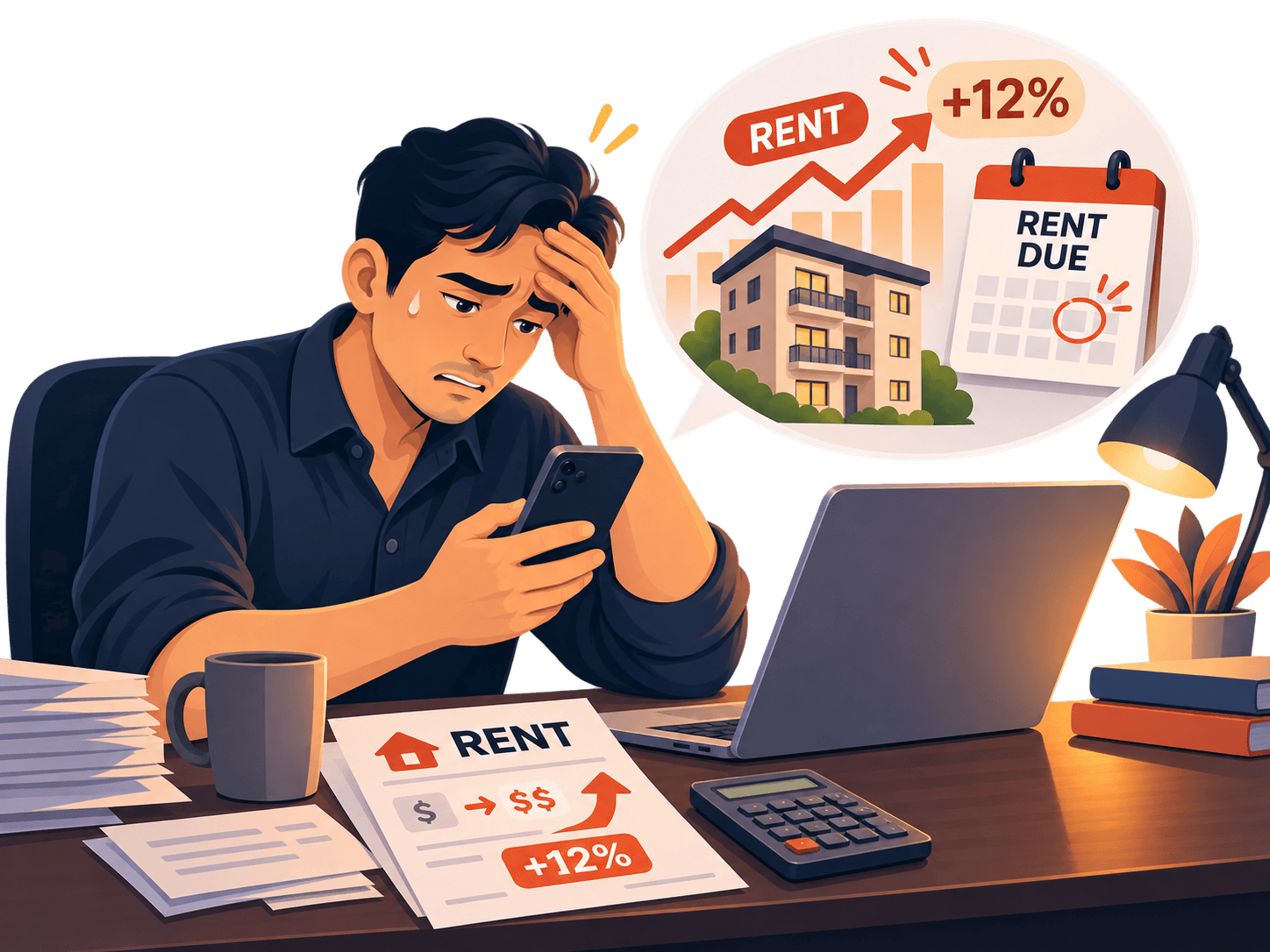
No, it is not normal, and on some units it is against the law. If your unit rents for ₱10,000 a month or less, the most you can raise the rent for the same tenant in 2026 is 1%. A 10% raise there can cost you a fine of ₱25,000 to ₱50,000, up to six months in jail, or both. If the rent is above ₱10,000, no law caps the increase. But you still cannot change the rent in the middle of a lease unless your tenant agrees. And 10% is far above the market. Rents across the country rose about 4% in the year to September 2026. Raising by 10% every year, with no warning, is the quickest way to lose a tenant who pays on time.
If the rent is ₱10,000 or less
Rent control covers this unit, wherever it is in the country. For 2026, National Human Settlements Board Resolution No. 2024-01 caps the increase at 1% for as long as the same tenant stays. Say your tenant pays ₱9,500. The most you may add in 2026 is ₱95, for a new rent of ₱9,595. A 10% raise would be ₱950, ten times what the law allows. Boarding houses, dormitories, rooms and bedspaces rented to students may raise rent only once a year. When the unit falls vacant, you may set any rent for the next tenant. Units built after the resolution was approved are not covered. The resolution ends on 31 December 2026, so check for a new rule in January. A tenant who thinks you broke the cap can take you to the barangay, and then to court.
If the rent is above ₱10,000
Above ₱10,000, the law does not set a number, so your lease does. Under the Civil Code, a contract has the force of law between the two people who signed it. The same code says its terms cannot be left to the will of only one of them. Read together, that means the rent in a one-year lease holds for that year. You cannot raise it in month seven because the condo dues went up. You can raise it when you renew, or during the term if the lease already says so. A clause such as "rent rises by 5% on each renewal" is legal above ₱10,000, as long as your tenant signed it. If you want yearly raises, write them into the lease now, with the exact percentage.
What "without notice" means in law
Neither the Rent Control Act nor the 2026 resolution sets a number of days' notice for a rent increase. That does not mean you can announce it on the day rent is due. If your tenant has a one-year lease, the old rent runs to the end of it, so a new rent only starts with a new lease they agree to. If your tenant pays month to month with no fixed end, the Civil Code treats the lease as running month to month. A new rent is then an offer for the next month. The tenant can take it or leave. On a covered unit, rent control also limits your right to end that kind of lease, so a refused raise is not a reason to evict.
Is 10% a year normal?
Not in 2026. The Philippine Statistics Authority put rental inflation at 4% in September 2026, as reported by BusinessWorld. National statistician Dennis Mapa noted that yearly rent adjustments usually start in January. In the condo market, Colliers counted nearly one in four Metro Manila condo units on the secondary market as vacant in mid-2026. It expected that share to reach almost 26% by the end of the year. Leechiu Property Consultants, in a BusinessWorld report, expected rental yields to stay flat in 2026. Some districts are recovering. Leechiu said rents in Bonifacio Global City had passed their pre-pandemic level. But a 10% raise every year is more than double what rents did nationally, and tenants can check.
Why 10% every year can cost you more than it earns
Run the numbers on a condo at ₱18,000 a month. A 10% raise adds ₱1,800 a month, or ₱21,600 over a year. Now say your tenant leaves instead and the unit sits empty for two months. That is ₱36,000 gone, before cleaning, repairs and the time spent showing the unit. With close to a quarter of Metro Manila condos empty, two months is not a far-fetched guess. Keep raising by 10% and the gap grows. After five years the rent would be about ₱29,000, against about ₱21,900 at 4% a year. A tenant paying ₱29,000 for a unit worth ₱22,000 on the market will find the ₱22,000 one.
How to raise rent the fair way
Start with the rent. At ₱10,000 or less, your ceiling in 2026 is 1%, and that settles it. Above ₱10,000, check what the lease says about increases and when it ends. Pick a number you can explain, such as the 4% that rents rose nationally, or what similar units in your building ask. Then write to your tenant at least a month before the lease ends, or before the next month starts if they pay month to month. Put the current rent, the new rent, the date it starts and your reason in one letter. Leave room to talk. A tenant who pays on time is worth a smaller raise. Once you agree, both of you sign the renewal with the new rent in it. A fair raise once a year, in writing and in good time, keeps your income rising and your unit full.
Sources
- DHSUD, NHSB Resolution No. 2024-01: Rent control covering 1 January 2025 to 31 December 2026
- Lawphil, Republic Act No. 9653, Rent Control Act of 2009
- Daily Tribune, Gov’t cuts monthly rent hike for residential units, 5 January 2025
- PhilSTAR Property, A 1% safety net: what it means for renters in 2026, 17 December 2025
- Lawphil, Republic Act No. 386, Civil Code of the Philippines
- BusinessWorld, Philippine inflation heats up to 3-year high, 6 October 2026
- Rappler, Inflation rate, Philippines, January 2026, 5 February 2026
- The Manila Times, via Newswav, Developers slowing Metro Manila condo launches, 4 August 2026
- BusinessWorld, Metro Manila rental yields may stay flat in 2026, analysts say, 30 December 2025
Browse homes listed by their owners, and contact the landlord directly.
Browse rentalsAutomatic billing, email reminders, e-signed leases and reports, without the enterprise price.
Download App